
Why Are Trading Learning Guides Important?

Trading often looks simple from the outside. A person sees a chart moving up and down, watches someone make profits online, and starts believing that success comes from finding the right strategy or the right signal. The reality changes quickly when real money is involved.
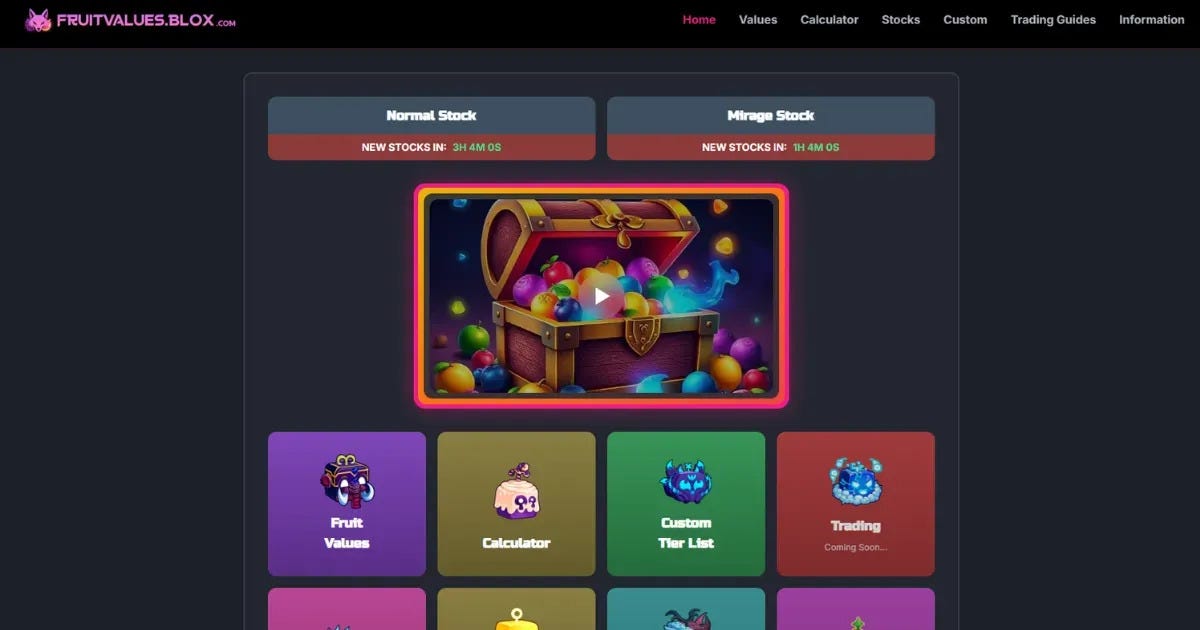
The difficult part of trading is not clicking the buy or sell button. The difficult part is understanding why a trade makes sense, how much risk is acceptable, how emotions influence decisions, and how to stay consistent when the market does not behave as expected. Fruit values blox Trading Guides can help traders develop a better understanding of these important aspects of the trading process.
In my experience, many beginners enter financial markets with the wrong priority. They spend most of their time searching for profitable trading strategies, indicators, or signals while ignoring the basic skills that actually support long-term improvement. They want to know where to enter a trade before learning how markets move, how risk works, or how professional traders think.
This is where trading learning guides become valuable. A good guide does not promise easy profits or a shortcut to success. Instead, it provides structure. It helps beginners understand trading concepts in the correct order, avoid unnecessary mistakes, and develop the decision-making skills required to operate in real market conditions without getting distracted by unrelated topics like Meme fruit value. Trading is a skill, and like any skill, it requires proper learning, practice, and experience. A structured approach can make that journey clearer and more manageable.
What Is a Trading Learning Guide?
A trading learning guide is a structured resource designed to help people understand trading step by step. It explains important concepts, teaches essential skills, and provides a learning path that prevents beginners from becoming overwhelmed by random information.
The internet contains thousands of articles, videos, courses, and opinions about trading. While having access to information is useful, too much unorganized information can create confusion. A beginner might learn about candlestick patterns one day, cryptocurrency trading the next day, and advanced indicators after that without understanding how these topics connect.
A proper trading learning guide organizes information logically. It usually starts with basic concepts such as how financial markets work, what influences price movements, and how different trading instruments operate. Then it moves toward more advanced topics like technical analysis, strategy development, risk management, and trading psychology.
There is a major difference between collecting trading information and developing trading skills.
Many beginners collect hundreds of trading videos and articles but still struggle when making actual decisions. This happens because knowledge alone does not automatically create understanding. Traders need a process that helps them apply concepts, test ideas, review mistakes, and improve their approach.
A good trading learning guide turns information into a practical learning system.
Why Are Trading Learning Guides Important?
Trading Learning Guides Help Build Strong Foundations
Every successful trader starts with understanding the basics. Before learning complex strategies, beginners need to understand how markets actually function.
Trading learning guides help explain important foundations such as market structure, price movement, trading terminology, and different asset classes.
For example, someone entering the market should understand the difference between stocks, forex, commodities, and cryptocurrencies. Each market has different characteristics, different risks, and different factors affecting price movements.
A beginner who does not understand these basics often makes decisions based on incomplete information. They may believe every market works the same way or assume that a strategy that works in one environment will automatically work everywhere.
What many new traders misunderstand is that trading is not only about predicting whether prices will rise or fall. It is about analyzing probabilities and managing uncertainty.
Learning guides also help beginners understand concepts like trends, volatility, liquidity, and market cycles. These ideas create a foundation that allows traders to make better decisions later.
Skipping basic education is similar to trying to repair a machine without understanding its parts. A trader may copy techniques from others but will struggle when market conditions change.
Trading Learning Guides Help Prevent Expensive Mistakes
One of the biggest advantages of trading education for beginners is reducing avoidable mistakes.
Markets provide endless opportunities, but they also punish poor decisions quickly. Many beginners learn important lessons only after losing money because they entered trading without proper preparation.
A common beginner mistake is entering trades without analysis. Someone sees a price moving upward and buys because they fear missing the opportunity. However, they have no plan for when to exit, where to place a stop loss, or how much money they are willing to risk.
Another common problem is following random signals from social media or online communities. Beginners often assume that another person’s trade recommendation removes the need for their own research. When the trade fails, they do not understand what went wrong.
I have seen traders spend months searching for the perfect strategy while repeating the same basic mistakes. They change indicators constantly, switch between trading styles, and blame strategies when the real issue is a lack of understanding.
Good trading learning guides teach traders how to think, not just what trades to take.
They explain why certain decisions are made and encourage traders to develop their own analysis process.
Trading Learning Guides Teach Risk Management
Many beginners focus almost entirely on making profits. Experienced traders focus first on protecting capital.
Risk management in trading is one of the most important skills because even a strong strategy can fail without proper control.
A trader can have several successful trades and still lose money if one large loss destroys previous gains. This is why professional traders pay close attention to position sizing, stop losses, and risk-to-reward ratios.
A good learning guide explains that every trade should have a clear risk plan before entering the market.
For example, instead of thinking, “How much can I make from this trade?” a disciplined trader asks, “How much am I willing to lose if my idea is wrong?”
This small change in thinking creates better decision-making.
Trading learning guides also help beginners understand that losses are normal. Losing trades do not always mean a trader failed. Even experienced traders have losing periods. The difference is that experienced traders manage losses properly.
Without risk management, emotions usually take control. Traders may increase their position size after losses, chase profits after winning trades, or hold losing positions hoping the market will recover.
Understanding risk helps prevent these destructive patterns.
Trading Learning Guides Create a Clear Learning Path
One of the biggest challenges beginners face is information overload.
A new trader may learn about technical analysis, indicators, chart patterns, economic news, and trading psychology all at once. Without structure, this information becomes difficult to apply.
Trading learning guides create a clear progression.
A beginner can first learn market basics, then understand charts, then study analysis methods, then practice strategies, and finally develop a personal trading approach.
This process is much more effective than jumping between random strategies.
Many unsuccessful traders are not lacking information. They are lacking organization. They know many concepts but do not know when or how to use them.
A structured learning path helps traders build confidence because each new concept connects with previous knowledge.
How Trading Learning Guides Improve Trading Decisions
Trading decisions involve much more than finding an entry point.
Before entering a trade, a trader needs to understand the reason behind the decision. Is there a clear setup? Does the market condition support the idea? How much risk is involved?
A trading learning guide teaches traders to create a plan before acting.
During a trade, emotional control becomes important. Markets rarely move exactly as expected. Prices may temporarily move against a trader, creating fear and uncertainty.
Without proper education, beginners often make emotional decisions. They close good trades too early because of fear or hold losing trades too long because they hope the market will reverse.
Trading psychology plays a major role here.
After a trade is completed, experienced traders review what happened. They analyze whether the decision was correct, whether mistakes were made, and what can be improved.
This is why maintaining a trading journal is valuable. It helps traders identify repeated mistakes and improve their process over time.
Successful traders are not simply people who find winning strategies. They are people who continuously improve their decision-making.
What Should a Good Trading Learning Guide Teach?
Trading Fundamentals
A valuable trading guide should begin with fundamentals.
Beginners need to understand how markets operate, how orders work, and what factors influence price movements.
Learning trading basics creates confidence because traders understand the environment they are participating in.
Technical Analysis
Technical analysis is an important area of trading education. It involves studying price charts to identify possible opportunities.
A good guide should explain charts, candlesticks, trends, support and resistance levels, indicators, and price action.
However, it should also provide realistic expectations.
Technical analysis is not a crystal ball. It does not predict the future with certainty. Instead, it helps traders analyze possibilities and make more informed decisions.
Fundamental Analysis
Fundamental analysis focuses on factors that influence the value of an asset.
For stocks, this may include company performance, earnings, industry conditions, and economic factors. For currencies, traders may study interest rates, inflation, and economic reports.
Understanding fundamentals helps traders see the bigger picture instead of reacting only to short-term price movements.
Trading Psychology
Many traders eventually discover that psychology is one of the hardest parts of trading.
Fear, greed, impatience, and overconfidence can damage even a good strategy.
A strong trading guide explains how emotions influence decisions and teaches traders the importance of discipline and consistency.
Strategy Testing and Practice
A beginner should not immediately risk significant money while learning.
Good trading guides explain the value of demo trading, backtesting, and reviewing results.
Testing allows traders to understand whether a strategy actually works and how it performs under different market conditions.
Practice does not guarantee success, but it helps build experience without unnecessary financial risk.
Why Should Beginners Learn Trading Before Using Real Money?
Many beginners enter financial markets because they see opportunities to make money, but they underestimate the level of skill required to trade consistently. The market does not reward effort alone. It rewards preparation, discipline, and the ability to make decisions under uncertainty.
Trading without knowledge is risky because every decision involves probability. A trader who does not understand market behavior may confuse luck with skill. They might make money during a strong market trend and believe they have mastered trading, only to lose heavily when conditions change.
I have seen this happen many times. A beginner makes several profitable trades during a bullish period, increases their position size, and becomes overconfident. When the market reverses, they discover that their success was based more on favorable conditions than a reliable process.
This is why learning before using real money matters.
Trading education for beginners helps people understand how markets work before financial pressure affects their decisions. It gives them time to study charts, understand trading concepts, practice strategies, and develop emotional control.
Practice accounts are useful because they allow beginners to experience market movements without risking their savings. They can test ideas, make mistakes, and learn how different decisions affect results.
However, practice should be taken seriously. A trader who treats demo trading like a game may develop unrealistic habits. The goal is not just to make imaginary profits. The goal is to build a disciplined process that can eventually be applied with real money.
A strong foundation reduces unnecessary losses, but it does not remove risk. Trading will always involve uncertainty. The purpose of education is to help traders handle that uncertainty more intelligently.
Can Trading Learning Guides Guarantee Trading Success?
No trading learning guide can guarantee success.
This is one of the most important lessons beginners need to understand. Any resource promising guaranteed profits, secret strategies, or effortless income should immediately raise questions.
Financial markets are influenced by countless factors, including economic conditions, investor sentiment, global events, and unexpected news. Even professional traders with years of experience cannot predict every market movement.
A good trading learning guide does not promise certainty. Instead, it teaches traders how to make better decisions when outcomes are uncertain.
The real value of a trading guide comes from helping traders develop:
Better market understanding
Improved decision-making skills
Stronger risk management habits
Greater emotional control
A structured learning process
For example, two traders may analyze the same chart and reach different conclusions. One may enter a trade with a clear plan, defined risk, and realistic expectations. Another may enter because of excitement and fear of missing out.
The difference is not always the strategy. Often, the difference is the quality of the decision-making process.
Trading education improves preparation, but preparation must be combined with practice, patience, and continuous improvement.
Trading Learning Guides vs Learning Through Trial and Error
Experience is one of the most valuable teachers in trading, but learning only through mistakes can become extremely expensive.
Every trader needs experience because reading about trading is different from actually managing a position, dealing with losses, and controlling emotions. However, beginners do not need to repeat every possible mistake personally.
A good trading learning guide helps traders avoid common errors before they happen.
For example, a beginner might learn through personal experience that using excessive leverage can quickly damage an account. But a proper guide can explain this risk before the trader makes that mistake.
Random learning often creates confusion. A person may watch one trader who focuses on technical analysis, another who trades news events, and another who uses automated systems. Without a structured foundation, they may try everything and master nothing.
Copying other traders creates another problem. A strategy that works for one person may not match another person’s goals, risk tolerance, or trading style.
Structured education does not replace experience. It improves the quality of experience.
Instead of making random mistakes, traders can focus their practice on meaningful improvement.
How Trading Learning Guides Help Different Types of Traders
Different traders have different goals, time commitments, and approaches. A useful learning guide helps people understand which skills matter most for their style.
Beginner Traders
For beginners, trading learning guides provide essential knowledge.
They help new traders understand terminology, market basics, chart reading, and risk management before they start making decisions with real money.
Without guidance, beginners often focus on advanced topics too early. They search for complex strategies without understanding simple principles.
Day Traders
Day traders need knowledge about short-term price movements, market volatility, execution speed, and emotional control.
A learning guide helps them understand that frequent trading does not automatically create more opportunities. Sometimes, fewer high-quality decisions are better than constant activity.
Swing Traders
Swing traders need to understand trends, market cycles, technical setups, and patience.
A structured guide helps them identify potential opportunities without reacting emotionally to every small price movement.
Long-Term Investors
Even long-term investors benefit from education.
Understanding company fundamentals, market conditions, and risk management helps investors make better decisions instead of simply following market trends.
Common Mistakes People Make When Learning Trading
Trying Too Many Strategies
Many beginners believe the next strategy they discover will solve their problems.
They move from indicators to chart patterns to automated systems without spending enough time understanding one approach.
The problem is not usually a lack of strategies. The problem is a lack of mastery.
Trading requires repetition. A trader needs time to understand how a method performs in different situations.
Searching for Guaranteed Signals
Many beginners look for someone who can tell them exactly when to buy and sell.
The attraction is understandable. Trading feels easier when someone else makes the decision.
However, relying completely on signals prevents traders from developing their own skills.
A better approach is learning why a trade exists and how to evaluate opportunities independently.
Ignoring Trading Psychology
Some traders believe success comes only from technical knowledge.
They study charts for months but ignore their emotional reactions.
Fear can cause early exits. Greed can cause excessive risk-taking. Frustration can lead to revenge trading after losses.
Understanding trading psychology is essential because traders are not only analyzing markets. They are also managing themselves.
Ignoring Risk Management
A trader without risk control is vulnerable regardless of strategy quality.
Many beginners focus on winning trades but ignore the importance of protecting their account during losing periods.
Risk management in trading is what allows traders to survive long enough to improve.
Starting With Too Much Money
Beginners sometimes invest significant amounts before they understand the market.
This creates emotional pressure. Small price movements feel stressful because too much money is involved.
Learning should happen gradually. Capital should increase only when skills and discipline improve.
Focusing Only on Entries
Many beginners believe finding the perfect entry is the main challenge.
Experienced traders understand that exits, position size, and risk control are equally important.
A good entry with poor management can still become a bad trade.
How To Use Trading Learning Guides Effectively
A trading learning guide is only useful when applied properly.
The first step is learning fundamentals. Beginners should understand markets, terminology, and basic concepts before searching for advanced strategies.
The next step is practice. Traders should study charts, observe price movements, and test their understanding.
After learning concepts, traders should develop a trading plan. This plan should explain what setups they trade, how much risk they accept, and how they handle losses.
Review is another important step. Traders improve by analyzing their decisions, not by simply moving from one trade to another.
Keeping a trading journal can reveal patterns in behavior. A trader may discover that most losses come from entering trades too quickly or ignoring their own rules.
Learning trading is a process, not a single event. Markets continue changing, so traders must continue improving.
What Makes a Trading Learning Guide Valuable?
Not all trading guides provide the same value.
A high-quality trading guide focuses on understanding rather than promises.
It explains concepts clearly, uses practical examples, and prepares beginners for real market situations.
A valuable guide should include realistic expectations. It should explain that losses happen, strategies require testing, and improvement takes time.
It should also focus heavily on risk management and psychology because these areas often determine whether traders survive long term.
Poor-quality guides usually focus on excitement. They promise quick profits, present trading as easy, or emphasize secret methods.
A useful guide does the opposite. It prepares traders for the challenges they will face.
The best learning resources help traders become independent thinkers instead of people who constantly depend on someone else’s opinions.
Conclusion
Trading learning guides are important because they provide direction in a market environment filled with complexity and uncertainty. They help beginners understand the foundations of trading, avoid common mistakes, and develop important skills such as risk management, technical analysis, and trading psychology.
A good guide does not create guaranteed success. Instead, it helps traders make better decisions, build discipline, and approach markets with realistic expectations. Trading is not a skill developed overnight. It requires study, practice, review, and continuous improvement.
The most effective way to learn trading is to focus on understanding first, then applying knowledge through practice. Beginners who build strong foundations, manage risk carefully, and review their decisions regularly give themselves a much better chance of developing useful trading skills over time.
FAQs
Why are trading learning guides important for beginners?
Trading learning guides are important for beginners because they provide a structured path in a field that can easily become overwhelming. When someone starts learning trading, they are often exposed to thousands of opinions, strategies, indicators, and market predictions from different sources. Without a clear learning process, beginners may struggle to understand what information is useful and what information creates confusion. A good trading learning guide helps organize knowledge by introducing important concepts in the right order, such as how markets work, trading terminology, risk management, technical analysis, and trading psychology.
For new traders, these guides are also valuable because they help reduce unnecessary mistakes. Many beginners lose money not because they lack intelligence, but because they enter markets without understanding basic principles. A structured guide teaches them how to analyze opportunities, create a trading plan, control emotions, and manage risk before putting significant capital at risk. While no guide can guarantee trading success, quality education can help beginners develop better habits and make more informed decisions.
Can someone learn trading without a guide?
Yes, someone can learn trading without a formal guide, but the process is often much slower and more challenging. Some traders develop their knowledge through personal experience, market observation, and years of trial and error. However, learning only through mistakes can become expensive because many beginner errors involve real financial losses. Without proper direction, new traders often jump between different strategies, copy other traders, or spend too much time searching for shortcuts instead of building fundamental skills.
A trading learning guide does not replace experience, but it creates a foundation that makes experience more valuable. It helps traders understand important concepts before facing real market situations. Instead of randomly collecting information, beginners can follow a structured approach, practice their skills, test ideas, and gradually improve their decision-making process. Having guidance can save time and help traders avoid mistakes that experienced traders have already identified.
Are trading learning guides enough to become profitable?
Trading learning guides are an important starting point, but they are not enough by themselves to make someone profitable. A guide can teach valuable concepts such as market analysis, trading strategies, risk management, and trading psychology, but profitability requires practical application. Traders must learn how to apply knowledge in different market conditions, manage emotions during real trades, and develop discipline over time.
Successful trading comes from combining education with experience, testing, and continuous improvement. A person can understand every trading concept theoretically but still struggle when facing real decisions involving money and emotions. Good trading guides provide preparation and direction, but traders must build their own skills through practice, reviewing trades, learning from mistakes, and developing a consistent approach that fits their personality and goals.
What should beginners learn first in trading?
Beginners should first learn the basic foundations of trading before focusing on advanced strategies or complicated indicators. The first step is understanding how financial markets work, including concepts such as price movement, market participants, trading terminology, and the differences between assets like stocks, forex, commodities, and cryptocurrencies. This basic knowledge helps traders understand the environment they are participating in instead of making decisions based on incomplete information.
After learning the fundamentals, beginners should focus on risk management, chart analysis, and trading psychology. Many new traders make the mistake of searching for the perfect strategy before understanding how to protect their capital or control emotions. A strong learning process teaches traders that success depends not only on finding opportunities but also on managing risk, following a plan, and making consistent decisions over time.
How long does it take to learn trading?
The time required to learn trading depends on the individual’s dedication, learning approach, and the type of trading they want to pursue. Understanding basic concepts may take a few weeks or months, but developing practical trading skills usually requires much more time. Trading involves multiple areas of knowledge, including market analysis, strategy development, risk management, and emotional control. Learning these skills requires both education and hands-on practice.
Many beginners underestimate the learning period because they focus mainly on finding profitable strategies. In reality, becoming comfortable with trading decisions requires experience and repeated practice. Traders need time to study charts, test ideas, analyze mistakes, and understand how different market conditions affect their approach. Instead of focusing only on how quickly they can make money, beginners should focus on how effectively they can build their skills.
Why do many beginners fail in trading?
Many beginners fail in trading because they enter the market with unrealistic expectations and insufficient preparation. They often believe trading is mainly about finding winning strategies, but they underestimate the importance of risk management, discipline, and emotional control. Some traders risk too much money, use excessive leverage, follow random signals, or change strategies constantly whenever they experience losses.
Another major reason beginners struggle is that they focus on short-term results instead of developing a long-term process. Trading requires patience and the ability to handle uncertainty. Successful traders understand that losses are part of the process and focus on managing them properly rather than trying to avoid every losing trade. Beginners who build strong foundations, maintain realistic expectations, and continuously improve their decision-making have a much better chance of developing sustainable trading skills.